
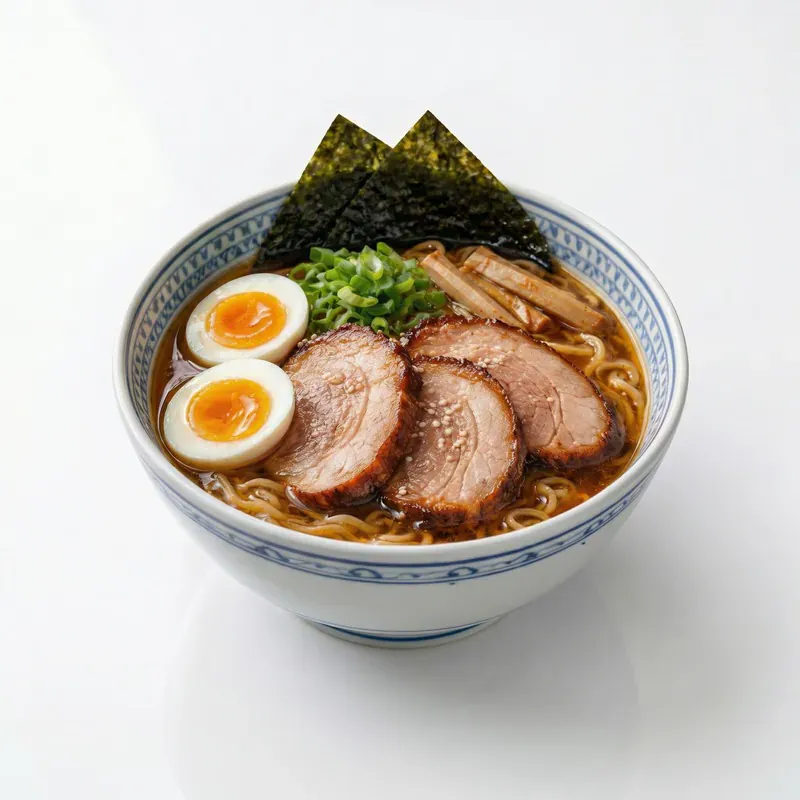
Comment choisir son ramen : trouver le bol qui vous ressemble
Face a une carte de ramen, on hesite souvent : tonkotsu ou shoyu, nouilles fines ou epaisses, viande ou version vegetale ? Bonne nouvelle, il n'existe pas de mauvais choix, seulement celui qui correspond a votre envie du moment. Ce guide vous donne des reperes simples pour lire un menu de ramen, comprendre ce qui distingue chaque bol et composer, a coup sur, celui qui vous ressemble.
Par ou commencer : cerner son envie
Avant meme de lire la carte, posez-vous une question toute simple : qu'ai-je envie de ressentir ? Un ramen se choisit d'abord par la sensation qu'il procure. Cherchez-vous un plat qui reconforte et rassasie apres une longue journee, ou une soupe plus legere et parfumee qui se deguste sans lourdeur ? Cette premiere intention oriente deja la moitie du choix, bien avant les noms japonais et les styles regionaux.
Pensez aussi a votre niveau de faim. Un ramen est un plat complet : il contient un bouillon, des nouilles, une proteine et des legumes. Si vous avez tres faim, un bol riche et genereux vous calera durablement ; si l'appetit est modere, un bouillon clair suffira sans vous alourdir. Enfin, tenez compte de vos habitudes : etes-vous plutot sensible au gras, au sel, au piquant, ou aux saveurs delicates ?
En repondant a ces trois questions — la sensation recherchee, le niveau de faim et vos preferences de gout —, vous transformez une carte intimidante en une decision claire. Le reste de ce guide detaille chaque critere pour affiner ce premier reflexe et vous aider a passer commande en confiance.
Le bouillon, la vraie question a se poser
Si un seul critere devait guider votre choix, ce serait le bouillon. C'est lui l'ame du ramen, le fruit de longues heures de cuisson qui portent toutes les autres saveurs. Un bouillon peut etre clair et limpide ou opaque et cremeux, leger et salin ou dense et enveloppant. Comprendre cette echelle de richesse, c'est deja savoir vers quel bol se tourner.
Il faut aussi distinguer le bouillon de son assaisonnement, le tare. Le tare est cette base concentree — a la sauce soja, au sel ou au miso — deposee au fond du bol avant d'y verser le bouillon. C'est lui qui donne au ramen son nom : un meme bouillon de volaille peut ainsi devenir un shoyu, un shio ou un miso selon le tare choisi. Retenir cette mecanique aide a decrypter n'importe quelle carte.
Chez un bon artisan, le bouillon mijote de longues heures pour extraire collagene et umami. Un bouillon fait maison se reconnait a sa profondeur : il enrobe les nouilles sans jamais ecraser les garnitures. C'est ce niveau de soin qui separe un ramen memorable d'une simple soupe de nouilles.
Les quatre grands styles en un coup d'oeil
Pour choisir vite, il suffit de connaitre les grandes familles. Voici quatre reperes qui couvrent l'essentiel des cartes de ramen, du plus delicat au plus riche, avec l'occasion ideale pour chacun. Reperez celui qui correspond a votre envie du jour, puis affinez avec les sections suivantes.
Tonkotsu
Bouillon opaque et cremeux, longuement mijote jusqu'a devenir laiteux. Le style le plus riche et le plus rassasiant. A choisir quand on a faim et qu'on cherche du reconfort.
Riche · CremeuxShoyu
Bouillon clair a la sauce soja, limpide et ambre. Salin mais delicat, il laisse parler le dashi. Le choix ideal pour un premier ramen ou un repas plus leger.
Delicat · TokyoMiso
Bouillon corse et legerement sucre grace a la pate miso fermentee. Terreux, profond, reconfortant. Parfait quand on veut un plat qui tient au corps.
Miso · HokkaidoVégétarien
Base de kombu, shiitake et miso blanc pour un umami vegetal intense. Ni viande ni poisson, mais une profondeur bien reelle. Le bon reflexe pour une envie plus verte.
Vegetal · ShiitakePour aller plus loin dans la comparaison de ces bouillons, notre guide complet des styles de ramen detaille les nuances du tonkotsu, du miso, du shoyu et du shio.

Le tonkotsu : pour qui aime la richesse
Le tonkotsu est le style a choisir quand on recherche le reconfort absolu. Son bouillon est obtenu en faisant mijoter des os pendant de longues heures, jusqu'a ce qu'il atteigne cette texture laiteuse et cette richesse en collagene qui font sa reputation. Le resultat est un liquide cremeux, opaque, profondement savoureux, ou chaque gorgee revele des couches de saveurs successives.
C'est le bol le plus rassasiant de la carte. On le choisit quand on a vraiment faim, quand il fait froid, ou simplement quand on a envie de se faire plaisir sans compter. Servi avec du chashu fondant, un oeuf ajitama coulant et des nouilles fines qui tiennent la cuisson, il compose un repas dense et enveloppant. Attention toutefois : sa richesse peut surprendre un palais qui decouvre le ramen.
Notre conseil : si vous hesitez a franchir le pas, demandez une version un peu moins grasse ou partagez le bol pour en apprecier l'intensite sans saturer. Le tonkotsu se merite, mais il recompense largement ceux qui aiment les saveurs profondes et les textures onctueuses.
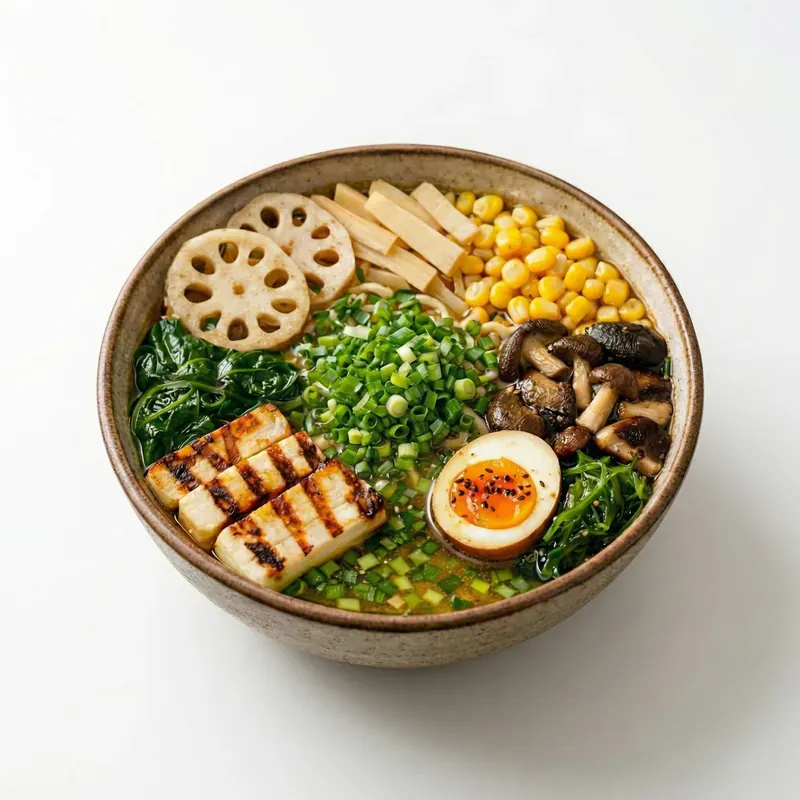
Le ramen vegetarien : l'umami sans viande
Choisir un ramen ne veut pas dire renoncer aux saveurs profondes quand on ne mange ni viande ni poisson. Le ramen vegetarien construit son bouillon a partir de kombu (algue seche), de champignons shiitake longuement infuses et de miso blanc. Ces trois piliers de la cuisine vegetarienne japonaise produisent un umami naturel et intense, qui n'a rien a envier aux bouillons carnes.
C'est le choix ideal pour une envie plus verte, plus legere, ou simplement pour varier. Garni de tofu grille, de legumes de saison prepares al dente, de mais doux et de ciboulette, ce bol offre une belle diversite de textures. Pour une option vegane, il suffit de retirer l'oeuf marine : le reste du bol conserve toute sa richesse.
Contrairement a une idee recue, un ramen vegetarien bien concu n'est pas une version « allegee » par defaut : c'est une interpretation a part entiere, pensee pour extraire la profondeur du regne vegetal. Si vous doutez encore de la richesse possible sans viande, c'est le bol qui vous fera changer d'avis.
Nouilles fines ou epaisses : ce que ca change
On l'oublie souvent, mais la nouille compte autant que le bouillon dans l'equilibre d'un ramen. Sa forme, son epaisseur et sa fermete determinent la maniere dont elle porte le liquide et resiste sous la dent. Une nouille bien accordee sublime le bol ; une nouille mal choisie le dessert. Heureusement, la logique est simple a retenir.
Les nouilles fines et fermes s'associent naturellement aux bouillons riches et cremeux comme le tonkotsu : elles s'enroulent du liquide sans se gorger d'eau ni devenir molles. Les nouilles plus epaisses et ondulees, elles, conviennent aux bouillons corses de type miso, qu'elles accrochent davantage a chaque bouchee. La regle d'or : plus le bouillon est dense, plus la nouille peut se permettre d'etre fine et nette.
Un dernier detail : la fermete de cuisson. Beaucoup d'amateurs preferent des nouilles al dente, qui gardent du mordant jusqu'a la derniere bouchee. Dans la plupart des cas, la maison associe deja la nouille adaptee a son bouillon — inutile de se compliquer la vie, faites confiance a l'accord propose et concentrez votre choix sur le style de bouillon.
Les garnitures qui affinent le choix
Une fois le bouillon choisi, les garnitures personnalisent le bol. Le chashu — viande braisee lentement jusqu'a fondre en bouche — apporte du corps et de la generosite : un bon reflexe quand on a faim. L'ajitama, cet oeuf marine au coeur coulant, ajoute une touche sale-sucree et une texture soyeuse tres appreciee. Ces deux classiques transforment un ramen simple en repas complet.
Cote fraicheur et texture, le nori grille apporte des notes iodees, le menma (pousses de bambou fermentees) une note terreuse et croquante, les oignons verts ciseles un peps herbace. Le mais doux, les germes de soja et les epinards viennent alleger et colorer l'ensemble. Choisir ses garnitures, c'est ajuster l'equilibre entre richesse et fraicheur selon son gout.
Notre conseil : ne surchargez pas. Deux a trois garnitures bien choisies valent mieux qu'un bol encombre. Laissez le bouillon rester la vedette, et servez-vous des garnitures pour souligner sa personnalite — un oeuf pour l'onctuosite, du nori pour le iode, un peu de verdure pour la respiration.
Doser l'intensite : gras, sel et epices
Un meme style de ramen peut se vivre de mille facons selon son intensite. Le gras, d'abord : il donne au bouillon sa rondeur et sa sensation d'enveloppe. Pour un bol plus leger, tournez-vous vers un shoyu ou un shio ; pour davantage de reconfort, vers un tonkotsu ou un miso. Beaucoup de maisons acceptent d'ajuster le niveau de matiere grasse a la commande.
Le sel, ensuite, structure le gout. Un bouillon bien assaisonne reveille toutes les autres saveurs, mais chacun a son seuil : n'hesitez pas a preciser vos preferences. Enfin, le piquant. De plus en plus de bols proposent une pate pimentee ou une huile de sesame relevee, a ajouter progressivement. Le bon reflexe : commencer doucement, gouter, puis relever par petites touches jusqu'a trouver son equilibre.
L'idee generale est de rehausser le bouillon sans jamais le masquer. Un ramen reussi garde son identite meme rehausse : le piment ne doit pas ecraser l'umami, le sel ne doit pas couvrir le dashi. Doser l'intensite, c'est accorder le bol a votre humeur du jour, sans trahir le travail du bouillon.
Choisir selon la saison et le moment
Le contexte compte autant que la carte. En hiver, quand le froid mord, un bouillon dense et reconfortant fait des merveilles : le miso terreux et le tonkotsu cremeux rechauffent et rassasient, comme une couverture bien chaude. Le corps reclame alors du gras, du sel et de la profondeur, et le ramen y repond parfaitement.
Aux beaux jours, l'envie bascule vers plus de legerete. Un shoyu clair ou un shio salin, parfumes et limpides, se degustent sans lourdeur. Le ramen vegetarien, accompagne d'une note fraiche — salade croquante, edamame —, s'inscrit lui aussi dans cette recherche d'equilibre estival. Le meme plat sait donc se faire reconfortant ou rafraichissant selon la saison.
Au-dela des saisons, pensez au moment de la journee et a la compagnie. Un dejeuner rapide appelle un bol plus leger ; un diner convivial autorise la generosite d'un tonkotsu partage avec quelques accompagnements. Choisir son ramen, c'est aussi accorder le bol a l'instant que l'on vit.
Debutants
Premiere fois : les erreurs a eviter
La premiere erreur des debutants est de viser trop riche d'emblee. Un tonkotsu tres gras peut saturer un palais qui decouvre le ramen : mieux vaut commencer par un shoyu ou un shio, plus delicats, pour apprendre a lire l'equilibre du bouillon, des nouilles et des garnitures. On monte ensuite en intensite a son rythme, au fil des visites.
Deuxieme piege : trop attendre avant de deguster. Le ramen se mange chaud et sans trainer, tant que les nouilles gardent leur mordant. Aspirez-les franchement, alternez bouillon et garnitures, et n'hesitez pas a demander conseil. Choisir son ramen, c'est aussi accepter d'experimenter : chaque bol goute affine vos preferences pour le suivant.
Comment choisir son ramen chez Yoki Ramen
Chez Yoki Ramen, au 31 Rue du General de Gaulle a Melun, chaque bol est pense pour vous aider a trouver le votre. Nos bouillons mijotent douze heures, nos tare sont montes separement, nos garnitures preparees sur place : vous disposez ainsi de tous les registres, du shoyu delicat au tonkotsu cremeux, en passant par le miso reconfortant et une belle option vegetarienne.
Notre equipe se fera un plaisir de vous orienter selon votre envie du jour. Decouvrez l'ensemble de nos ramen authentiques, parcourez notre carte complete, ou completez votre repas avec nos gyoza et yakitori grilles. Envie plus legere ? Nos poke bowls frais prolongent l'esprit maison.
Pour approfondir, notre guide sur les accompagnements du ramen vous aidera a composer une table complete autour de votre bol.
FAQ
Questions frequentes pour choisir son ramen
Quel ramen choisir quand on debute ?+
Pour un premier ramen, mieux vaut commencer par un shoyu ou un shio : leurs bouillons clairs, sales mais delicats, sont plus faciles a apprivoiser que la richesse d'un tonkotsu. Ils laissent decouvrir l'equilibre du dashi, des nouilles et des garnitures sans saturer le palais. Une fois ce repere pris, on peut monter en intensite vers le miso puis le tonkotsu.
Quelle est la difference entre tonkotsu, shoyu et miso ?+
Ces trois noms designent avant tout un type d'assaisonnement et de bouillon. Le tonkotsu est un bouillon d'os mijote jusqu'a devenir laiteux et cremeux ; le shoyu est un bouillon clair parfume a la sauce soja ; le miso est un bouillon corse enrichi de pate de soja fermentee. On passe du plus delicat (shoyu) au plus riche (tonkotsu), le miso occupant une place intermediaire, terreuse et reconfortante.
Comment choisir un ramen quand on a tres faim ?+
Quand l'appetit est grand, orientez-vous vers un bouillon riche et rassasiant : un tonkotsu cremeux ou un miso genereux, accompagnes de nouilles plutot epaisses qui tiennent bien et d'un ajout de chashu ou d'un oeuf marine. Ces bols nourrissants calent durablement. A l'inverse, pour une faim moderee, un shoyu leger avec des nouilles fines suffit amplement.
Existe-t-il un ramen sans viande ni poisson ?+
Oui, le ramen vegetarien construit son bouillon a partir de kombu, de champignons shiitake longuement infuses et de miso blanc. Ces ingredients produisent un umami naturel et profond, sans recourir a la viande ni au poisson. Garni de tofu grille, de legumes de saison et de mais doux, il devient meme vegan si l'on retire l'oeuf marine.
Faut-il choisir des nouilles fines ou epaisses ?+
Le choix des nouilles depend du bouillon. Les nouilles fines et fermes accompagnent bien les bouillons riches comme le tonkotsu, car elles s'enroulent de liquide sans devenir molles. Les nouilles plus epaisses et ondulees conviennent aux bouillons corses de type miso, qu'elles accrochent davantage. Dans le doute, fiez-vous au style servi : chaque maison associe deja la nouille adaptee a son bouillon.
Comment doser le piquant et le gras de son ramen ?+
L'intensite se regle a la commande. Pour moins de gras, choisissez un shoyu ou un shio plutot qu'un tonkotsu. Pour le piquant, beaucoup de bols proposent une pointe de pate pimentee ou d'huile de sesame relevee a ajouter progressivement : commencez doucement, gouttez, puis ajustez. L'idee est de rehausser le bouillon sans masquer sa saveur d'origine.
Quel ramen choisir selon la saison ?+
En hiver, les bouillons denses et reconfortants — miso, tonkotsu — rechauffent et rassasient. Aux beaux jours, on privilegie un shoyu ou un shio plus legers, voire un ramen vegetarien accompagne d'une note fraiche. Le ramen reste toutefois un plat de toute saison : c'est surtout votre envie du moment, entre reconfort et legerete, qui doit guider le choix.
Pour aller plus loin
Pret a passer commande en confiance ? Explorez nos bols mijotes chaque jour a Melun et prolongez la lecture avec nos autres guides.