
Qu’est-ce que le ramen ? Voyage au coeur du bol japonais
Derriere ce mot court se cache tout un art culinaire. Le ramen n'est pas une simple soupe de nouilles : c'est un plat complet, patiemment construit, ou un bouillon mijote de longues heures rencontre des nouilles fermes, un assaisonnement precis et des garnitures choisies. Ce guide repond en profondeur a une question toute simple — qu'est-ce que le ramen ? — en explorant son histoire, son anatomie, ses grands styles et la maniere de le deguster.
Qu’est-ce que le ramen, au juste ?
Commencons par une definition simple. Le ramen est un plat japonais compose de nouilles de ble servies dans un bouillon chaud et savoureux, puis agremente de garnitures. Sous cette apparente simplicite se cache pourtant une construction d'une grande precision : rien n'est laisse au hasard, du choix des os pour le fond a la maniere de disposer chaque tranche de viande sur le dessus du bol.
Ce qui distingue un veritable ramen d'une soupe de nouilles ordinaire, c'est l'equilibre entre quatre elements indissociables : le bouillon, le tare (l'assaisonnement concentre), les nouilles et les garnitures. Chacun a son role, et c'est leur dialogue qui fait la magie du plat. Un bouillon sublime avec des nouilles mal choisies rate sa cible ; a l'inverse, de belles nouilles noyees dans un fond fade laissent le convive sur sa faim.
Le ramen est donc autant une technique qu'une recette. On peut le voir comme un cadre : quatre piliers stables sur lesquels chaque region, chaque maison, chaque cuisinier vient poser sa signature. C'est cette liberte dans la contrainte qui explique l'incroyable diversite des ramen a travers le Japon — et aujourd'hui, a travers le monde.
Aux origines : de la Chine au Japon
Pour comprendre ce qu'est le ramen, il faut remonter le fil de son histoire. Les nouilles de ble en bouillon sont arrivees au Japon depuis la Chine a la fin du dix-neuvieme siecle, notamment par les ports de commerce comme Yokohama, ou vivaient d'importantes communautes chinoises. On parlait alors de « nouilles chinoises » (chuka soba), servies dans un bouillon clair et sale.
C'est au vingtieme siecle que le plat s'emancipe et devient pleinement japonais. Apres la Seconde Guerre mondiale, la disponibilite de la farine de ble et l'appetit pour des plats nourrissants et abordables font exploser sa popularite. Les echoppes ambulantes se multiplient, chaque quartier developpe sa recette, et le ramen s'ancre durablement dans la culture populaire japonaise.
A partir de la, le ramen se regionalise a l'extreme. Le tonkotsu naît a Fukuoka, dans le sud ; le miso s'invente a Sapporo, dans le grand nord ; Tokyo perfectionne son shoyu. Chaque territoire adapte le plat a son climat, a ses produits et a ses gouts. Cette histoire de metissage puis d'appropriation explique pourquoi le ramen est aujourd'hui considere comme un pilier de la cuisine japonaise, malgre ses racines etrangeres.
L’anatomie d’un bol de ramen
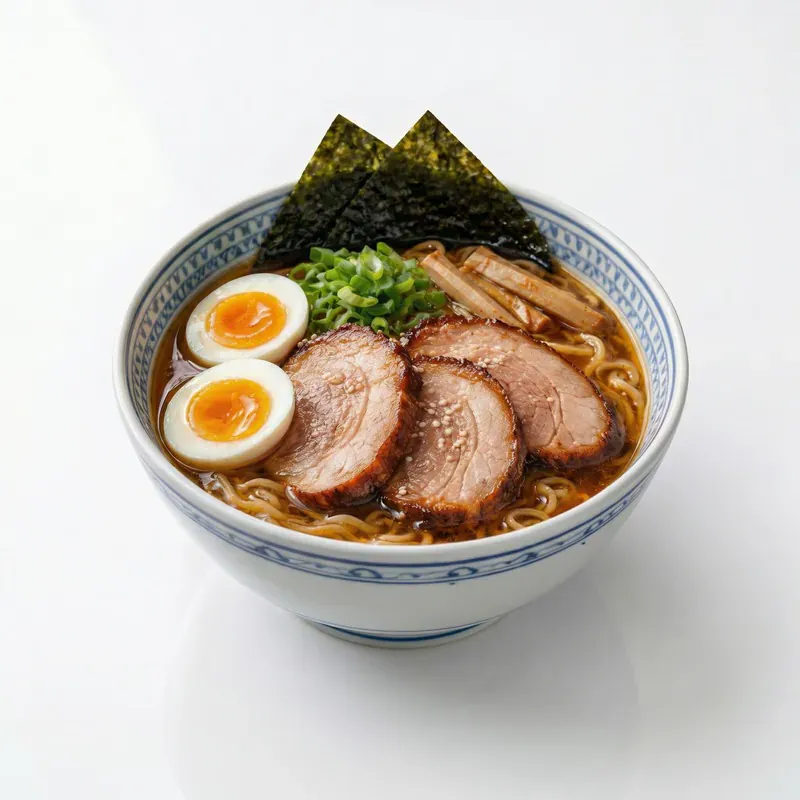
Un bol de ramen se lit comme une partition a quatre voix. Tout au fond repose le tare, cet assaisonnement concentre dont on parlera plus loin. Par-dessus vient le bouillon brulant, verse au dernier moment, qui reveille les aromes et rechauffe l'ensemble. Les nouilles, cuites a part puis egouttees, sont deposees dans ce liquide, ou elles s'imbibent progressivement sans se defaire.
Enfin, les garnitures viennent couronner le bol, disposees avec soin selon une esthetique tres codifiee : une tranche de viande braisee ici, un demi-oeuf marine la, une bande de nori dressee sur le bord, quelques oignons verts cisele pour la couleur. Cette composition n'est pas qu'esthetique : elle organise les saveurs et les textures pour que chaque bouchee combine plusieurs sensations.
Comprendre cette anatomie, c'est saisir pourquoi le ramen fascine autant. Ce n'est pas un plat que l'on assemble a la hate : c'est un edifice ou chaque etage repose sur le precedent. Detaillons maintenant ces quatre piliers, un a un, pour vraiment repondre a la question « qu'est-ce que le ramen ».
Le bouillon, l’ame du plat
Si un seul element devait resumer ce qu'est le ramen, ce serait son bouillon. C'est lui qui porte toutes les autres saveurs, lui qui demande le plus de travail et de patience. Un bon fond de ramen mijote de longues heures — souvent entre six et douze — pour extraire le collagene des os, emulsionner les graisses et liberer les acides amines responsables de cet umami si caracteristique.
Il existe deux grandes familles de bouillons. Les fonds clairs (chintan), obtenus par une cuisson douce, donnent des liquides limpides et delicats. Les fonds troubles (paitan), fruit d'une ebullition plus vive, deviennent opaques et cremeux, comme le fameux tonkotsu. Entre ces deux extremes se deploie toute la palette des ramen, du plus leger au plus enveloppant.
Cette exigence de temps n'est pas un argument marketing : c'est une necessite technique. C'est elle qui separe un bouillon artisanal d'une soupe industrielle. Un fond bien mene enrobe les nouilles et soutient les garnitures sans jamais les ecraser. Quand vous plongez votre cuillere dans un ramen reussi, vous goutez le fruit de cette patience.
Le tare, la signature cachee
Voici l'element le plus meconnu du ramen, et pourtant le plus determinant pour son identite : le tare. Il s'agit d'une base d'assaisonnement concentree, deposee au fond du bol avant que l'on y verse le bouillon. Quelques cuilleres seulement, mais elles changent tout. C'est le tare, et non le bouillon lui-meme, qui donne son nom au ramen.
Un meme bouillon de volaille peut ainsi devenir trois ramen differents selon le tare choisi : a la sauce soja, il donne un shoyu ; au sel, un shio ; a la pate de soja fermentee, un miso. Le tare concentre le sel, l'umami et les aromes secondaires ; le bouillon, lui, apporte le corps et la chaleur. Les deux se rencontrent dans le bol, au dernier instant.
Comprendre le role du tare, c'est detenir la cle pour dechiffrer n'importe quelle carte de ramen. La prochaine fois que vous lirez « shoyu » ou « miso » sur un menu, vous saurez qu'il s'agit avant tout d'une histoire d'assaisonnement — la touche invisible qui signe le caractere du bol.
Les nouilles, colonne vertebrale du bol
Le mot « ramen » designe d'abord une nouille. Il s'agit de nouilles de ble particulieres, dont la texture et l'elasticite tiennent a un ingredient cle : le kansui, une eau alcaline qui donne aux nouilles leur couleur jaune legere, leur fermete caracteristique et cette capacite a resister au bouillon chaud sans se gorger d'eau trop vite.
Leur forme n'est jamais choisie au hasard. Les nouilles fines et droites accompagnent naturellement les bouillons riches et cremeux comme le tonkotsu : elles s'enroulent de liquide sans devenir molles. Les nouilles plus epaisses et ondulees conviennent aux bouillons corses de type miso, qu'elles accrochent davantage. La regle est intuitive : plus le bouillon est dense, plus la nouille peut se permettre d'etre fine et nette.
La fermete de cuisson compte tout autant. Beaucoup d'amateurs preferent des nouilles al dente, qui gardent du mordant jusqu'a la derniere bouchee. C'est aussi pourquoi le ramen se mange vite : plongees dans le bouillon brulant, les nouilles continuent de cuire dans le bol. Attendre trop longtemps, c'est risquer de les retrouver molles — un detail qui en dit long sur la maniere de deguster le plat.
Les garnitures qui habillent le ramen
Le quatrieme pilier, ce sont les garnitures — ce que les Japonais appellent les toppings. Elles apportent couleur, texture et generosite, et personnalisent chaque bol. La plus emblematique est le chashu, une viande braisee lentement jusqu'a fondre en bouche, deposee en fines tranches sur les nouilles. Vient ensuite l'ajitama, cet oeuf marine au coeur coulant et au gout sale-sucre si reconnaissable.
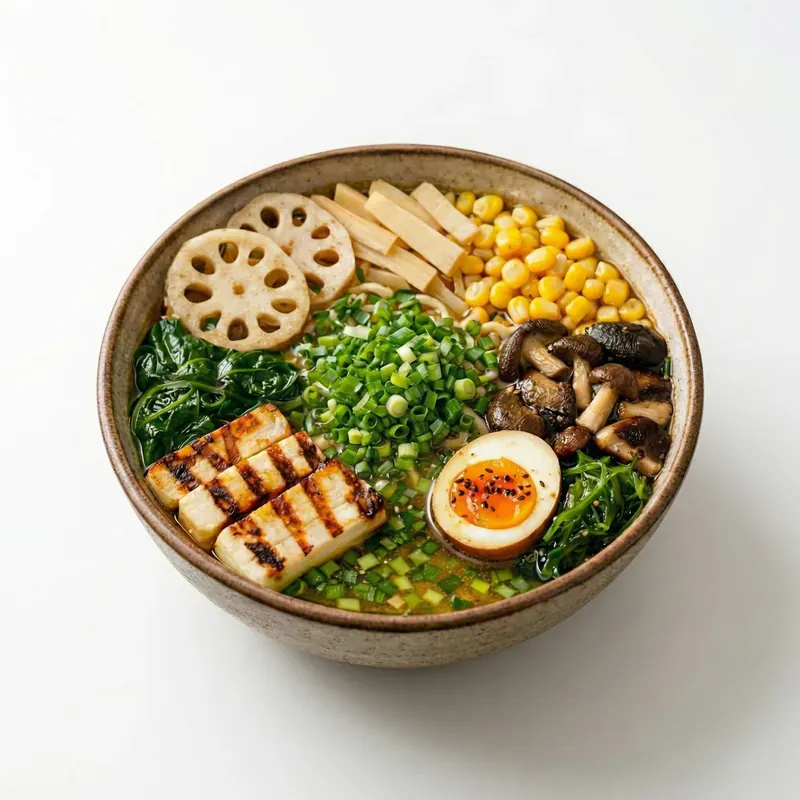
Autour de ces classiques gravite tout un vocabulaire de saveurs : le nori grille pour ses notes iodees, le menma (pousses de bambou fermentees) pour sa texture croquante et terreuse, les oignons verts cisele pour leur peps herbace, le mais doux, les germes de soja ou encore les epinards pour la fraicheur. Certaines maisons ajoutent une noix de beurre, une pointe d'huile pimentee ou de l'ail noir.
Les garnitures ne sont pas de simples decorations : elles equilibrent le bol. Une viande riche appelle une note fraiche, un bouillon gras reclame une pointe d'acidite ou de croquant. Bien choisies, elles transforment un ramen simple en repas complet, et permettent d'ajuster chaque bol au gout de celui qui le deguste.
Les grands styles de ramen
Maintenant que les quatre piliers sont poses, on comprend mieux comment se declinent les grands styles de ramen. Chacun se definit avant tout par son tare et son bouillon, et porte l'empreinte d'une region du Japon. Voici les quatre familles a connaitre, du plus epure au plus riche.
Tonkotsu
Bouillon d'os mijote de longues heures jusqu'a devenir laiteux et opaque. Le style le plus riche et le plus enveloppant, ne dans le sud du Japon, a Hakata.
Cremeux · HakataShoyu
Bouillon clair parfume a la sauce soja, ambre et limpide. Le premier ramen apparu a Tokyo au debut du vingtieme siecle, salin mais delicat.
Delicat · TokyoMiso
Bouillon corse et legerement sucre grace a la pate de soja fermentee. Terreux et reconfortant, ne des hivers rigoureux de Sapporo, sur l'ile d'Hokkaido.
Corse · HokkaidoShio
Le plus ancien et le plus epure : un bouillon assaisonne au sel, transparent et leger, qui laisse s'exprimer toute la finesse du dashi.
Sale · EpurePour explorer les nuances de ces bouillons, notre guide complet des styles de ramen compare en detail le tonkotsu, le miso et le shoyu. Et si vous hesitez au moment de commander, notre article pour choisir son ramen vous donnera tous les reperes.
Comment se deguste un ramen
Savoir ce qu'est le ramen, c'est aussi savoir le manger. Premiere regle : ne pas trainer. Le ramen se deguste chaud et sans attendre, tant que les nouilles gardent leur mordant. On saisit les nouilles aux baguettes, on les porte vers la cuillere ou directement vers la bouche, et l'on aspire franchement. Ce bruit, mal vu ailleurs, est parfaitement accepte au Japon : il aere les aromes et rafraichit les nouilles.
L'ideal est d'alterner les plaisirs : quelques nouilles, une gorgee de bouillon a la cuillere, une bouchee de chashu ou d'oeuf marine. Cette alternance permet d'apprecier chaque texture et d'eviter la lassitude. On garde le nori pour envelopper une bouchee de nouilles, on ajuste l'assaisonnement au fil du repas avec les condiments proposes.
Un ramen se vit aussi souvent en compagnie de quelques accompagnements — gyoza croustillants, brochettes grillees, salade fraiche — qui prolongent l'experience. Mais le bol reste la vedette : tout gravite autour de lui. Bien mange, un ramen se termine chaud, sans une nouille de trop dans le fond.
A retenir
Trois idees recues a oublier
Premiere idee recue : le ramen serait une soupe instantanee. Les briques de nouilles deshydratees en portent le nom, mais elles n'ont rien a voir avec un ramen artisanal, dont le bouillon mijote des heures. Deuxieme idee recue : le ramen serait toujours a base de porc. C'est faux — il existe d'excellentes versions au poulet, et des ramen vegetariens dont l'umami repose sur le kombu et le shiitake.
Troisieme idee recue : un ramen se resumerait a son bouillon. Le fond est essentiel, mais un grand ramen naît de l'accord entre les quatre piliers — bouillon, tare, nouilles et garnitures. Oublier l'un d'eux, c'est passer a cote du plat. Voila, en somme, ce qui fait qu'un bol de ramen est bien plus qu'une simple assiette de nouilles en soupe.
Le ramen a Melun, chez Yoki Ramen
Cette definition du ramen, nous la mettons en pratique chaque jour au 31 Rue du General de Gaulle, a Melun. Chez Yoki Ramen, nos bouillons mijotent douze heures, nos tare sont montes separement, nos nouilles choisies pour tenir la cuisson et nos garnitures preparees sur place. Vous retrouvez ainsi tous les registres, du shoyu delicat au tonkotsu cremeux, en passant par le miso reconfortant et une belle option vegetarienne.
Le meilleur moyen de comprendre ce qu'est le ramen reste encore d'en gouter un. Decouvrez l'ensemble de nos ramen authentiques, parcourez notre carte complete, ou completez votre bol avec nos gyoza et yakitori grilles. Envie plus legere ? Nos poke bowls frais prolongent l'esprit maison.
Pour aller plus loin dans la lecture, notre guide sur les accompagnements du ramen vous aidera a composer une table complete autour de votre bol.
FAQ
Questions frequentes sur le ramen
Qu’est-ce que le ramen exactement ?+
Le ramen est un plat japonais compose de nouilles de ble servies dans un bouillon chaud et savoureux, agremente de garnitures variees comme du porc ou du poulet braise, un oeuf marine, des algues nori, des pousses de bambou et des oignons verts. Herite des nouilles chinoises puis profondement reinvente au Japon, il repose sur quatre piliers : le bouillon, le tare (assaisonnement concentre), les nouilles et les garnitures.
Quelle est la difference entre un ramen et une simple soupe de nouilles ?+
Un ramen n'est pas une soupe instantanee. Sa difference tient a la profondeur de son bouillon, souvent mijote plusieurs heures pour extraire collagene et umami, et a l'equilibre precis entre le fond, le tare, la nouille et les garnitures. Chaque element est pense pour dialoguer avec les autres. C'est cet assemblage soigne, et non la seule presence de nouilles dans un liquide, qui definit un veritable ramen.
Le ramen est-il d’origine chinoise ou japonaise ?+
Les deux, en quelque sorte. Les nouilles de ble en bouillon sont arrivees de Chine a la fin du dix-neuvieme siecle, mais le ramen tel qu'on le connait aujourd'hui a ete entierement reinvente au Japon au vingtieme siecle. Chaque region a developpe son style, ses bouillons et ses tare. Le ramen est donc devenu un plat pleinement japonais, avec une identite culinaire propre et une immense diversite locale.
Quels sont les principaux types de ramen ?+
On distingue quatre grandes familles selon l'assaisonnement du bouillon : le shoyu (sauce soja, clair et delicat, ne a Tokyo), le shio (sel, epure et leger), le miso (pate de soja fermentee, corse et reconfortant, originaire de Sapporo) et le tonkotsu (bouillon d'os cremeux et opaque, typique de Hakata). Chaque style se decline ensuite selon la nouille, les garnitures et les traditions regionales.
Le ramen contient-il toujours de la viande ?+
Non. S'il existe de nombreuses versions au porc ou au poulet, on trouve aussi d'excellents ramen vegetariens dont le bouillon repose sur le kombu (algue seche), les champignons shiitake et le miso blanc. Ces ingredients produisent un umami vegetal profond, sans viande ni poisson. Il suffit de retirer l'oeuf marine pour obtenir une version totalement vegane, tout aussi riche en saveurs.
Comment mange-t-on correctement un ramen ?+
On deguste un ramen chaud et sans trainer, tant que les nouilles gardent leur mordant. On saisit les nouilles aux baguettes, on les aspire franchement — un geste bien vu au Japon, car il aere les aromes — et l'on boit le bouillon a meme le bol ou a la cuillere. L'ideal est d'alterner nouilles, bouillon et garnitures pour profiter de chaque texture avant que le bol ne refroidisse.
Combien de temps faut-il pour preparer un vrai bouillon de ramen ?+
Un bouillon artisanal demande de la patience : il mijote generalement entre six et douze heures, parfois davantage. Ce temps long est indispensable pour dissoudre le collagene des os, emulsionner les graisses et liberer les acides amines responsables de l'umami. Chez Yoki Ramen, nos bouillons cuisent douze heures, chaque jour, pour atteindre cette densite qui distingue un ramen memorable d'une simple soupe.
Pour aller plus loin
Maintenant que vous savez tout, il ne reste plus qu'a passer a table. Explorez nos bols mijotes chaque jour a Melun et prolongez la lecture avec nos autres guides.