
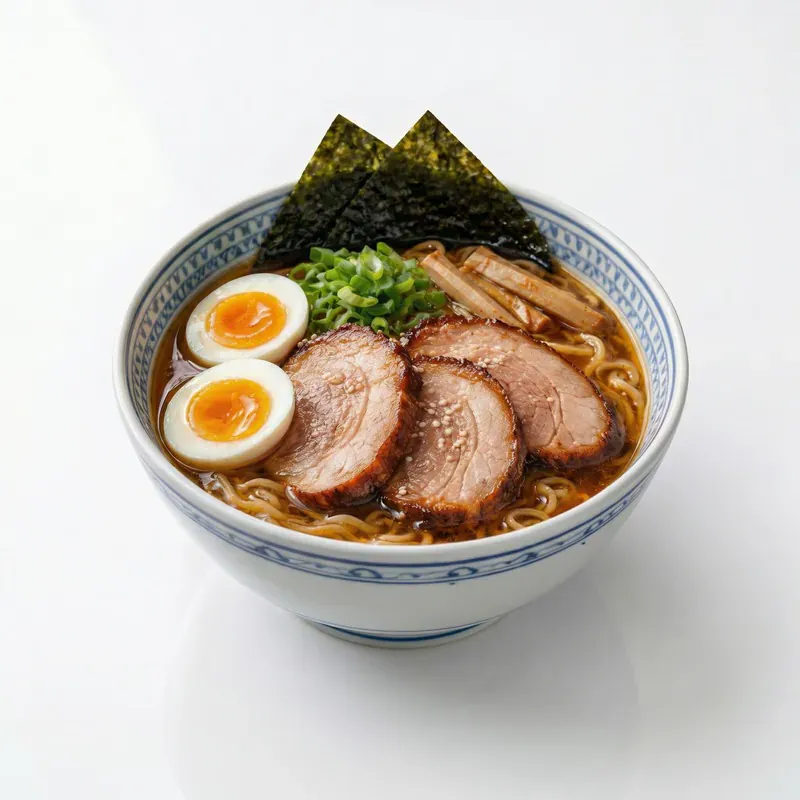
Histoire du ramen : de Tokyo a Melun
Le ramen a parcouru un chemin extraordinaire. Simple soupe de nouilles vendue dans les rues de Yokohama a la fin du XIXe siecle, il est devenu un phenomene culinaire mondial. Cette histoire traverse les continents et les epoques, de la Chine ancienne aux echoppes de Tokyo, de l'apres-guerre japonais aux restaurants parisiens, pour aboutir aujourd'hui jusqu'a nos bols servis a Melun, en Seine-et-Marne.
Les racines chinoises : de Yokohama aux yatai
L'histoire du ramen ne commence pas au Japon, mais en Chine. Les lamian, litteralement « nouilles etirees » en mandarin, sont preparees depuis des siecles dans les provinces du nord. Cette technique, qui consiste a etirer la pate a la main pour former de longs fils reguliers, est un art a part entiere, qui demande des annees de pratique. C'est de cet heritage que descend, en droite ligne, le bol que l'on deguste aujourd'hui.
A la fin du XIXe siecle, des vagues d'immigrants chinois s'installent dans les ports japonais, notamment a Yokohama, Kobe et Nagasaki. Ils apportent leurs traditions culinaires, dont ces soupes de nouilles de ble servies dans un bouillon sale, garnies de quelques tranches de viande et de legumes. On les appelle alors « shina soba », les nouilles chinoises, et elles se vendent a prix modique aux travailleurs des ports et des usines.
Ces soupes se repandent grace aux yatai, ces stands ambulants qui sillonnent les rues le soir, signalant leur passage par le son d'une trompette en bois ou le cliquetis des baguettes. Le ramen est alors un plat de rue populaire, chaud et nourrissant, bien loin du phenomene gastronomique qu'il deviendra. La transition vers un plat pleinement japonais ne se fera pas du jour au lendemain : elle est le fruit de decennies d'adaptations patientes au palais local.
La naissance du ramen a Tokyo
Le premier restaurant de ramen officiel est generalement attribue au Rai-Rai Ken, ouvert en 1910 dans le quartier d'Asakusa, a Tokyo. Son fondateur, Ozaki Kanichi, engage des cuisiniers cantonais pour preparer les nouilles, mais adapte les recettes au gout japonais en y introduisant du katsuobushi (bonite sechee), du kombu (algue) et de la sauce soja. Cette fusion entre technique chinoise et palais japonais donne naissance au ramen moderne.
Dans les annees 1920 et 1930, le plat se diffuse dans les grandes villes. Il reste toutefois une nourriture de rue, appreciee des travailleurs et des etudiants, sans etre encore reconnue comme un pilier de la gastronomie japonaise. C'est a Tokyo que se fixe le style fondateur : le shoyu, un bouillon clair a la sauce soja, limpide et parfume, dont l'elegance discrete servira longtemps de reference.
Pour comprendre ce qui compose vraiment un bol de ramen — bouillon, tare, nouilles et garnitures —, notre article sur les origines et traditions du ramen prolonge utilement ce recit historique.
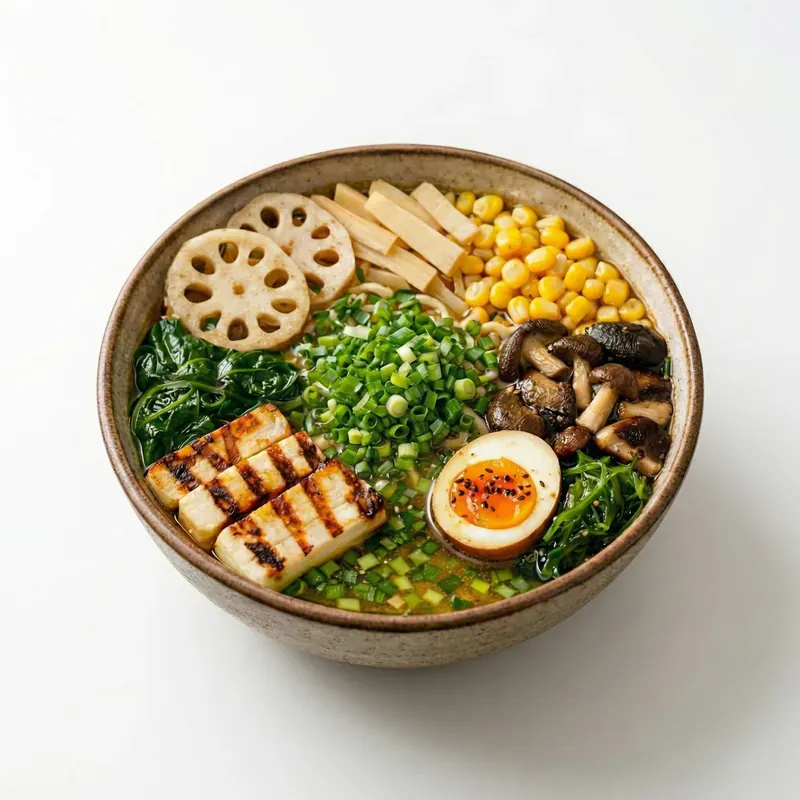
Les grands styles regionaux du Japon
A mesure que le ramen se repand, chaque region du Japon en developpe sa propre interpretation, posant les fondations des grands styles que l'on connait aujourd'hui. Du nord froid d'Hokkaido au sud tempere de Kyushu, le bouillon change de couleur, de texture et de caractere. Voici trois berceaux emblematiques et le style qu'ils ont fait naitre.
Tokyo — Shoyu
Le style historique de la capitale : un bouillon de volaille clair, ambre, assaisonne a la sauce soja naturellement brassee. Elegant et delicat, il pose les bases du ramen moderne.
Soja · ClairSapporo — Miso
Ne dans le froid d'Hokkaido, ce bouillon corse a la pate de soja fermentee est nourrissant et terreux. Un plat pense pour rechauffer les hivers rigoureux du nord.
Miso · ReconfortantFukuoka — Tonkotsu
Le sud du Japon a donne le style Hakata : des os mijotes de longues heures jusqu'a un bouillon laiteux, cremeux et charge de collagene. La richesse a l'etat pur.
Cremeux · HakataCette diversite regionale est l'une des grandes richesses du ramen. Pour explorer en detail les differences entre ces bouillons, notre guide complet des styles de ramen compare le tonkotsu, le miso, le shoyu et le shio.
L'explosion de l'apres-guerre
La fin de la Seconde Guerre mondiale marque un tournant decisif. Un Japon devaste et en pleine reconstruction fait face a une penurie alimentaire sans precedent. L'aide americaine fournit du ble en quantites massives, et une population habituee au riz se tourne vers les nouilles comme source de calories bon marche. Les echoppes de ramen se multiplient alors dans tout le pays.
Les yatai jouent ici un role decisif. Ces stands ambulants demandent peu d'investissement, se montent vite et repondent a un besoin fondamental : offrir un repas complet, chaud et rassasiant pour quelques yens. Autour d'eux se forme une culture du ramen de rue, conviviale et accessible, qui ancre durablement le plat dans le quotidien des Japonais.
En quelques annees a peine, le ramen passe du statut de curiosite d'immigres a celui d'aliment national. Ce basculement d'apres-guerre est le veritable acte de naissance du ramen populaire tel que nous le connaissons : un plat democratique, reconfortant, indissociable de la reconstruction du pays.
1958 : la revolution des nouilles instantanees
C'est dans ce contexte de reconstruction qu'une invention change durablement la trajectoire du ramen. En 1958, Momofuku Ando, homme d'affaires installe au Japon, met au point les premieres nouilles instantanees sous la marque « Chikin Ramen ». L'idee est simple mais geniale : precuire les nouilles puis les deshydrater par friture, de sorte qu'il suffise d'ajouter de l'eau bouillante pour obtenir un bol en quelques minutes.
En 1971, Ando lance le Cup Noodle, servi directement dans son contenant, qui devient un phenomene planetaire. Le ramen instantane democratise le nom et le gout du plat a l'echelle mondiale, bien avant que le ramen artisanal n'atteigne l'Occident. Cette invention est aujourd'hui consideree comme l'une des plus grandes innovations alimentaires du XXe siecle.
Il faut toutefois se garder d'une confusion frequente : le ramen instantane et le ramen de restaurant appartiennent a deux mondes differents. L'un est un produit industriel pratique ; l'autre, le fruit d'un long travail de bouillon, de tare et de garnitures fraiches. Si l'instantane a fait connaitre le mot « ramen » partout, c'est l'artisanat qui en a fait un art.
L'age d'or des maitres ramen
Parallelement a l'essor de l'instantane, le ramen artisanal connait son age d'or. Les annees 1960 et 1970 voient emerger les ramen-ya, ces maitres qui consacrent leur vie a perfectionner une seule recette. Certains font mijoter leurs bouillons pendant des jours, gardent leurs tare secrets et ajustent chaque detail — l'epaisseur de la nouille, la temperature du service, l'ordre des garnitures. Le ramen accede alors au rang d'art culinaire a part entiere.
Cette obsession japonaise pour le bol parfait est magnifiquement capturee par « Tampopo », le film de Juzo Itami sorti en 1985, veritable ode au ramen et a la quete de l'excellence. Le long-metrage contribue a populariser l'image du chef ramen perfectionniste, prete a tout pour reussir son bouillon, et fixe dans l'imaginaire collectif la dimension presque spirituelle du plat.
Les annees 1990 et 2000 marquent ensuite l'internationalisation du ramen. Les premiers restaurants specialises ouvrent a New York, Los Angeles, Londres et Sydney. Porte par la vague de la culture pop japonaise, des mangas et des animes, le ramen conquiert le monde occidental. Des classements des meilleures adresses apparaissent, et le plat devient un objet de passion pour les gourmets du monde entier.
Le ramen traverse les oceans : la France
En France, le ramen est longtemps reste dans l'ombre des sushis et des yakitoris, qui ont domine la perception de la cuisine japonaise pendant des decennies. Les premiers restaurants specialises n'ont ouvert a Paris qu'au debut des annees 2010, portes par une nouvelle generation de chefs japonais et franco-japonais desireux de faire decouvrir cet aspect meconnu de leur gastronomie.
Le quartier de l'Opera, surnomme « Little Tokyo » par les Parisiens, en devient le berceau. Des adresses reputees introduisent le public francais aux bouillons longuement mijotes et aux nouilles al dente. Le succes est immediat : les files d'attente devant ces restaurants deviennent legendaires, preuve que les gourmets francais etaient prets pour cette experience.
La culture manga et anime, tres presente en France, a joue un role d'accelerateur : voir des personnages devorer un bol fumant a donne envie a toute une generation de gouter le vrai ramen. Le plat cesse alors d'etre une curiosite pour devenir une envie recurrente.
Diffusion
De Paris aux villes de province
Une fois installe a Paris, le ramen ne s'est pas arrete aux portes de la capitale. Progressivement, la culture du bol mijote a gagne les grandes villes de province — Lyon, Bordeaux, Lille, Strasbourg — puis les villes moyennes, portee par une demande croissante pour une cuisine japonaise authentique, preparee avec le meme soin que dans les meilleures echoppes de Tokyo.
La Seine-et-Marne, et Melun en particulier, n'ont pas echappe a cette vague. A une portee de train de Paris, au carrefour de plusieurs bassins de population et a deux pas de Fontainebleau, la ville reunissait les conditions ideales pour accueillir une adresse dediee au ramen. Le public local, curieux et de plus en plus averti, cherchait autre chose qu'une simple offre « asiatique » generique.
Cette diffusion du centre vers la periphery raconte une histoire plus large : celle d'un plat qui, partout ou il s'installe, exige d'etre fait dans les regles. C'est precisement ce niveau d'exigence qui a ouvert la voie a des restaurants comme Yoki Ramen, decides a ne faire aucun compromis sur le bouillon.
Le ramen a Melun : la tradition chez Yoki Ramen
Lorsque Yoki Ramen ouvre ses portes au 31 Rue du General de Gaulle a Melun, l'ambition est claire : offrir aux habitants de la ville et de Seine-et-Marne un ramen authentique, prepare avec la meme rigueur que dans les meilleures echoppes du Japon. Pas de compromis sur la qualite du bouillon, pas de raccourcis sur les temps de cuisson, pas de poudres ni de concentres pour remplacer le travail artisanal.
Chaque jour, les cuisiniers preparent les bouillons selon un processus qui commence bien avant l'ouverture. Les os sont selectionnes, blanchis, puis mis a mijoter pendant douze heures a feu continu pour en extraire le collagene et les aromes qui donnent au bouillon sa profondeur et sa texture soyeuse. Les tare sont montes separement, les garnitures confectionnees sur place, et les nouilles choisies pour leur tenue.
Envie de decouvrir le resultat de cet heritage ? Explorez nos ramen authentiques, l'ensemble de nos plats sur notre carte complete, ou nos sushis et makis prepares avec le meme soin.
Heritage
Un heritage vivant dans chaque bol
L'histoire du ramen, de Yokohama a Tokyo, de Sapporo a Fukuoka, de Paris a Melun, est celle d'un plat qui transcende les frontieres et les cultures. Ne d'une soupe d'immigres, transforme par des generations de cuisiniers, popularise par l'apres-guerre puis par l'instantane, eleve au rang d'art par les maitres ramen : chaque etape a laisse sa trace dans le bol que l'on sert aujourd'hui.
Ce que l'on deguste a Melun n'est donc pas une simple soupe de nouilles, mais le point d'aboutissement d'un long voyage. Chaque bouillon mijote douze heures porte en lui plus d'un siecle d'histoire, adapte a notre terroir et a une meme exigence de qualite. Comprendre cette histoire, c'est savourer autrement : avec la conscience du chemin parcouru.
FAQ
Questions frequentes sur l'histoire du ramen
Le ramen est-il un plat japonais ou chinois ?+
Le ramen trouve ses racines dans les soupes de nouilles chinoises importees au Japon a la fin du XIXe siecle par des immigrants installes a Yokohama. Mais les cuisiniers japonais les ont transformees au point d'en faire un plat entierement different, par leurs techniques de bouillon, leurs tare et leur culture. Le ramen tel qu'on le connait aujourd'hui est indeniablement japonais.
Quand et ou est ne le premier restaurant de ramen ?+
On attribue generalement le premier restaurant de ramen au Rai-Rai Ken, ouvert en 1910 dans le quartier d'Asakusa a Tokyo. Son fondateur y employait des cuisiniers cantonais tout en adaptant les recettes au palais japonais avec du katsuobushi, du kombu et de la sauce soja. C'est cette fusion qui a fait naitre le ramen moderne.
Pourquoi le ramen a-t-il explose apres la Seconde Guerre mondiale ?+
Apres 1945, un Japon en reconstruction fait face a une penurie alimentaire. Le ble fourni par l'aide americaine permet une production massive de nouilles, et les echoppes de ramen — les yatai — se multiplient car elles demandent peu d'investissement pour un repas nourrissant et bon marche. En quelques annees, le ramen devient un aliment populaire dans tout le pays.
Qui a invente les nouilles instantanees ?+
Momofuku Ando, fondateur de Nissin, a mis au point les premieres nouilles instantanees en 1958 sous le nom de Chikin Ramen. En precuisant puis en deshydratant les nouilles par friture, il suffisait d'ajouter de l'eau bouillante. En 1971, il lance le Cup Noodle, qui devient un phenomene planetaire. Le ramen artisanal reste toutefois tres different de cette version instantanee.
Quand le ramen est-il arrive en France ?+
Le ramen a commence a gagner en visibilite en France au debut des annees 2010, porte par la culture manga et anime et par l'ouverture de restaurants specialises a Paris, notamment autour du quartier de l'Opera. Le phenomene s'est ensuite etendu aux grandes villes de province, puis aux villes moyennes comme Melun.
Quelle est la difference entre le style de Tokyo et les autres ?+
Le style de Tokyo est le shoyu : un bouillon clair a la sauce soja, delicat et limpide, considere comme le ramen classique. Sapporo a popularise le miso, plus corse et sucre, et Fukuoka le tonkotsu, cremeux et riche. Chaque region a developpe sa propre interpretation a partir d'une meme idee : des nouilles de ble dans un bouillon assaisonne.
Peut-on manger du ramen authentique a Melun ?+
Oui. Yoki Ramen sert du ramen authentique au 31 Rue du General de Gaulle a Melun. Les bouillons sont mijotes douze heures selon les methodes traditionnelles japonaises, avec des ingredients frais, des tare et des garnitures prepares sur place, sans poudre ni concentre.
Pour aller plus loin
Pret a gouter le point d'aboutissement de ce long voyage ? Decouvrez nos bols mijotes chaque jour a Melun et prolongez la lecture avec nos autres guides.